
Sylvia and Penny knew each other from grade school and shared a two-bedroom apartment. When Sylvia’s company provided the tools for her work, she no longer had a private office but began working from home for the company. However, space in the apartment was limited.
Penny, a young woman with a few bad habits, was slow to put things away. She didn’t like to throw away anything, even if it was in an old, dilapidated plastic box of clothes that no longer fit. She kept losing things around the apartment.
They agreed to share their unused bedroom, which included two small closets and was piled high with boxes and boxes of Penny’s treasures and her printer on one side of the room, to create office space for both of them. But Penny wasn’t in any hurry when it came to arranging her side of the space. Sylvia complained about it. A lot. She arranged her half of the office space and carefully spread a pretty rug on her side. Now what? Will working in the same space with Penny be difficult?
Sylvia had a bookcase, an open space with wooden shelves she used for projects in process on her side of the shared space. Her desktop had too many knick knacks. She placed a nice-sized wooden table lamp, a cup of pens, two pencil sharpeners (one looked like a little wooden bird), a big cup of paperclips, a small Bose hearing device, a wooden basket for small photos, a clock and three coasters for drinks. She almost forgot one treasured item: a white wooden donkey with a pen that her sister gave to her from her trip to South America. Looking at the mess on the desktop, she told Penny she would try to combine some items or get rid of her trinkets. But, she enjoyed these small items crowded together on her desktop.
She felt her side looked a lot better than Penny’s shelving, which anyone could see with black poles and her treasures collected in plastic tubs. But she didn’t want to look at Penny’s mess or even let visitors see black shelves and the messy looking plastic and cardboard boxes. How could they co-exist?
Getting Help to Solve a Problem
She complained to a dear friend, a nurse, about her dissatisfaction and asked for suggestions on what to do. The nurse suggested Penny could keep her side however she wanted, and the two women could have separate “office hours,” since Sylvia is up at dawn and Penny likes working into the wee hours.
That might work! They gave it a try. Perfect, Sylvia thought, as she wanted the space to look good, or at least far less messy. Penny likes to sleep late, and Sylvia takes the dog out around 6:30 a.m. The mess remained. They could look through the black racks in the middle and they tried not to talk much during the times both were in this office.
Lucy, their friend at work, suggested a curtain be hung on Sylvia’s side to cover boxes and the many, many unorganized shelves. That could allow the friction to fade.
They went to Walmart to purchase a pretty, striped shower curtain, but not the ugly rubber kind. It blended well with the rug. They both liked the new layout.
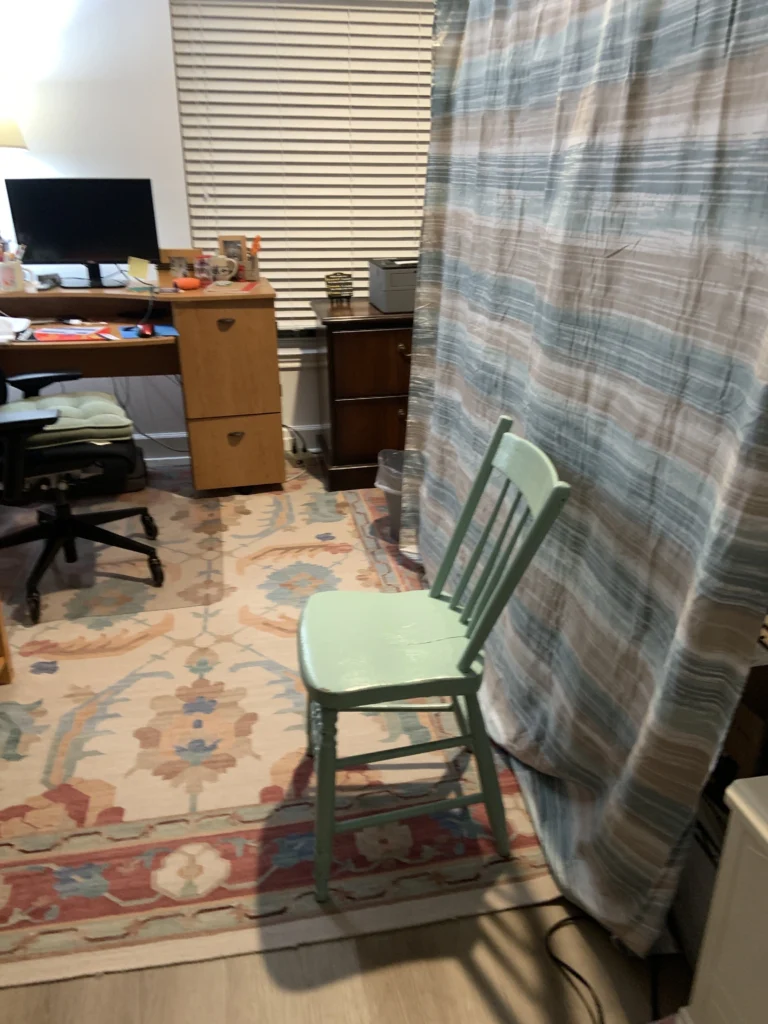
The moral of this story is to look for a solution, not just complain. How simple! Work things out or drive yourself crazy. It was still messy on one side of the office, but the bickering was gone! Long live the happiness of cooperation.
Anyhow, now Sylvia is working on what to do with her messy desktop!